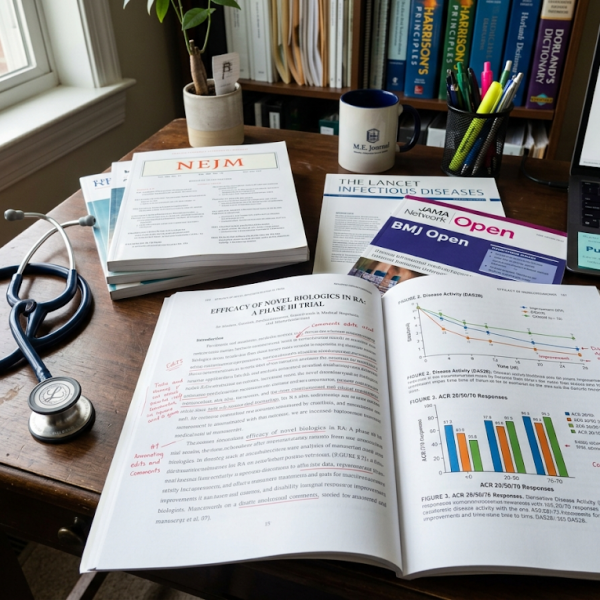
Medical publishers handle a constant stream of manuscripts, clinical trial data and regulatory submissions written in multiple languages. Before anything reaches print or goes live online, much of that material needs translation precise enough to withstand scientific and legal scrutiny.
Why Precision Isn't Negotiable in Medical Content
A clinical trial protocol, a drug insert or a pharmacovigilance report leaves no room for ambiguity. A single mistranslated term in a medical document can directly affect patient safety.
Experienced medical editors know that a mistranslated dosage instruction or a misread clinical term can distort how a study or a treatment guideline is interpreted.
Where Certified Translation Fits In
For documents intended for regulatory bodies, ethics committees or legal proceedings, a standard translation usually isn't sufficient. This is where certified translation services come in, providing an officially recognized version of a document that regulators and courts can accept without question.
Publishers handling regulatory submissions or expert medical reports intended for official use rely on this level of certification to keep their publications legally sound.
Working With German-Language Research
Germany produces a significant share of international clinical research and regulatory documentation. Medical publishers working with German-language studies, trial data or drug approvals often turn to specialized german translation services to ensure the source material is rendered accurately.
A clinical trial originally published in German can contain highly specific terminology, where every nuance matters to the healthcare professionals relying on the translated version.
The Pressure Publishers Face
Medical publishers must balance scientific rigor with tight publication schedules. Many work with translators who specialize specifically in medical content, people who understand both the technical terminology and the clinical context behind it.
A translator unfamiliar with medical vocabulary can introduce errors that are subtle but potentially dangerous.
Publishers act as the last checkpoint before findings reach practitioners, which places a particular responsibility on how faithfully a study is rendered. A translated methods section can change what a reader believes was done. The credibility of clinical research abroad rests substantially on that step.
Medical publishers commission certified translation because a study misread in one language undermines the evidence base in all of them. The same accuracy is expected in the room when researchers present findings to a mixed audience. Conferences drawing Brazilian clinicians usually retain a portuguese interpreter for the sessions, since the questions afterwards are where the useful exchange actually happens.
Why Healthcare Professionals Need to Trust the Source
Doctors and researchers who consult translated publications need to be able to trust them without reservation. A translation error discovered after publication can damage a publisher's reputation, or in serious cases, force a retraction.
Organizations such as the World Health Organization regularly emphasize the importance of terminological precision when medical information circulates internationally.
Standards That Shape Medical Publishing
The National Library of Medicine also underscores the need for reliable, validated documentation in any publication intended for healthcare professionals, reinforcing why rigorous, and often certified, translation matters so much in this field.
Publishers that build these requirements into their translation process from the start avoid costly corrections after publication.
What It Means for Medical Publishing
Whether it's a clinical trial, a regulatory report or a patient-facing document, translation quality directly determines how reliable a medical publication is. Investing in certified, specialized translation remains one of the most effective ways to protect both readers and a publisher's reputation.