A headline claims a new supplement "reverses aging" or a diet "cures" a chronic condition, and somewhere in the article is the phrase "according to a new study." Before taking that claim seriously, there is one question worth asking: was the study actually peer reviewed, and if so, what does that really guarantee? What is peer review sounds like a technical detail, but understanding it is one of the fastest ways to tell a solid piece of medical research from a press release dressed up as science.
What Peer Review Actually Involves
Peer review is the process by which independent experts in the same field evaluate a study before a journal agrees to publish it. Reviewers check the methodology, look for statistical errors, question whether the conclusions actually follow from the data, and flag anything that looks like a stretch. It is not a guarantee that a study is correct. It is a guarantee that other qualified people looked at the work critically before it reached print, which filters out a large share of obviously flawed research, though not all of it.
How to Know If an Article Is Peer Reviewed
Most readers never see the review process itself, so the practical question becomes how to know if an article is peer reviewed from the outside. Start with the journal name. Established, indexed journals almost always describe their review process on an "About" or "For Authors" page. A study published directly on a preprint server, a company blog, or a conference poster has typically not been through formal peer review yet, even when it is written with the same tone and formatting as a journal article. Databases like PubMed only index peer-reviewed biomedical literature, so finding a study there is a reasonably strong signal, though it is worth confirming rather than assuming.
What a Peer Reviewed Article Looks Like
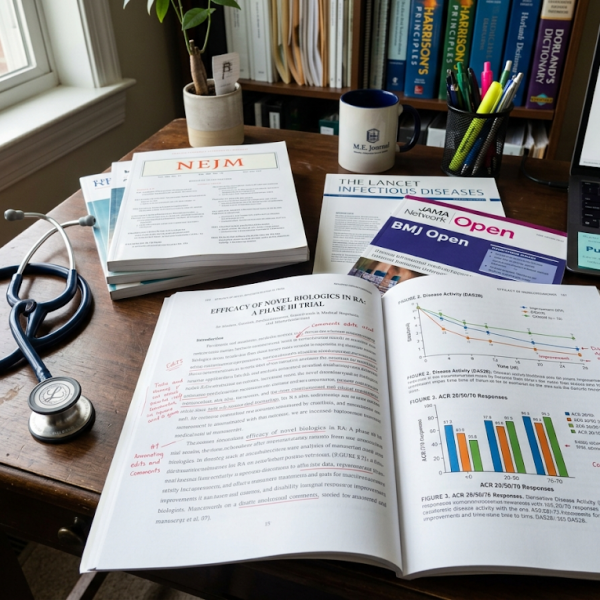
A genuine peer reviewed article usually follows a recognizable structure: an abstract, a methods section detailing exactly how the study was conducted, a results section with actual data, a discussion of limitations, and a list of citations connecting the work to prior research. A study missing a methods section, or one that only presents conclusions without showing how it got there, is a red flag regardless of where it was published. Sample size matters too: a trial involving a dozen participants can still be legitimately peer reviewed, but its findings deserve far less weight than a study with a properly powered cohort, and a careful abstract will usually say so plainly. Reputable journals also list a submission date and an acceptance date, which shows the manuscript sat with reviewers for a meaningful period rather than being rushed to print.
How to Tell If an Article Is Peer Reviewed When the Journal Is Unfamiliar
The trickiest cases involve journals nobody has heard of, which is increasingly common given how many exist. One practical check is whether the journal is listed in a recognized index, since indexes like MEDLINE apply their own vetting before including a title. Another is to look up the publisher; predatory journals that charge authors a fee and publish almost anything tend to have thin editorial boards and vague peer review descriptions. The peer review process overview on Wikipedia is a reasonable starting point for understanding the standard model against which an unfamiliar journal can be compared.
Why This Matters More in Medical Publishing Specifically
Medical research carries more real-world weight than most other fields, since clinical decisions and public health guidance sometimes trace back to published findings. That is also why how peer review functions in science gets scrutinized so closely, and why retractions in medical journals draw far more attention than in less consequential fields. A single well-designed, peer-reviewed trial still isn't the final word on a medical question. Readers looking for a fuller picture should check whether other studies have reached similar conclusions, a standard maintained by bodies like the National Library of Medicine, which curates biomedical literature specifically to help separate substantiated findings from one-off results.
Where Translation Fits Into the Picture
International medical research adds another layer, since a study conducted and reviewed in one language still needs to be translated accurately for it to be cited or built upon elsewhere. A subtle mistranslation of a dosage, a statistical term, or a study limitation can distort how a finding gets used long after the original peer review is finished, which is why publishers dealing with international submissions treat medical terminology translation as part of the quality chain rather than an afterthought.
The Bottom Line
Peer review is not a perfect filter, but it remains the clearest dividing line between research that has been checked by qualified outsiders and a claim that has not. The next time a headline cites "a new study," a minute spent confirming the journal, checking the methods section, and looking for the study on an indexed database tells you more about how much weight to give that claim than the headline itself ever will.