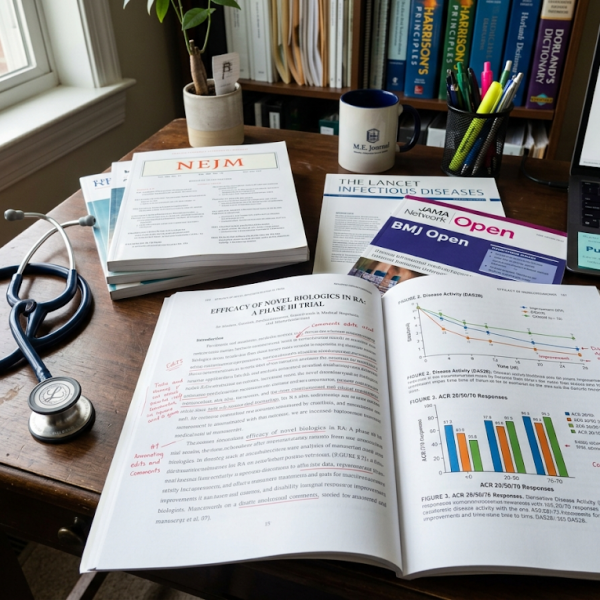
Peer review is supposed to catch errors before they reach print, but reviewers can only evaluate what's in front of them. When a submitted study originates in another language, the accuracy of the translation itself becomes part of the scientific record, and getting it wrong can quietly undermine an otherwise sound piece of research.
Why Translation Quality Is a Scientific Issue, Not Just a Linguistic One
Medical terminology leaves little room for ambiguity. A dosage figure, a statistical qualifier, or a clinical trial exclusion criterion translated imprecisely can change how readers interpret a study's findings entirely. This is why journals that regularly publish international research increasingly require certified translation services for non-English submissions rather than relying on author-provided translations.
Working with certified document translation services gives editorial boards a documented chain of accuracy, something that matters enormously if a study's conclusions are ever challenged or need to be reproduced by another research team.
Protecting the Peer Review Process
Reviewers evaluating a translated manuscript need confidence that what they're reading faithfully reflects the original data and methodology. When translation quality is uncertain, reviewers may flag legitimate research as unclear or, worse, approve a paper containing translation-introduced errors. Journals that rely on certified legal translation services for consent forms and ethics documentation extend that same rigor to protect the integrity of the review process at every stage.
A Growing Requirement Across the Industry
Organizations such as the International Committee of Medical Journal Editors and the National Library of Medicine have published guidance emphasizing accuracy and reproducibility standards that extend naturally to translated submissions, even though formal translation certification requirements still vary by publication.
Medical journals maintain translation accuracy through layered review, with each stage catching a different class of error. Publishing platforms have to support that workflow precisely, and generic systems tend to collapse the stages into one. Choosing a software development company that has actually worked in scholarly publishing saves months, because the constraints are unusual and expensive to discover late.
Peer review works because claims are checked by people equipped to challenge them, which is a standard consumer markets rarely reach. Buyers mostly rely on reputation instead. In the market for luxury electric cars that trust is doing an enormous amount of work.
As medical research becomes increasingly global, journals that build certified translation into their submission process protect both their scientific credibility and the researchers whose work depends on being understood exactly as intended.